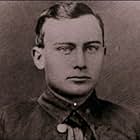
The Civil War (1990– )

TV Mini-Series  -   -  Documentary | History | War
9.0
Your rating:
    1 2 3 4 5 6 7 8 9 10 -/10 X  
Ratings: 9.0/10 from 3,384 users  
Reviews: 61 user | 14 critic

A comprehensive survey of the American Civil War.

0Check in
0Share...

User Lists

Related lists from IMDb users

a list of 2005 titles created 3 weeks ago
 
a list of 184 titles created 12 Feb 2012
 
a list of 1284 titles created 12 Nov 2011
 
a list of 552 titles created 15 Jan 2012
 

Connect with IMDb


Share this Rating

Title: The Civil War (1990– )

The Civil War (1990– ) on IMDb 9/10

Want to share IMDb's rating on your own site? Use the HTML below.

Take The Quiz!

Test your knowledge of The Civil War.

Season:

1

Year:

1990
Won 2 Primetime Emmys. Another 8 wins & 1 nomination. See more awards »

Videos

Photos

Learn more

People who liked this also liked... 

The West (TV Series 1996)
Documentary | History | War
    1 2 3 4 5 6 7 8 9 10 7.5/10 X  

Ken Burns' "The West" is a PBS 4-Video Series: - "Death Runs Riot" 85 min. - "Fight No More Forever" 85 min. - "Ghost Dance" 58 min. - "The People" 82 min.

Stars: Peter Coyote, Philip Bosco, Murphy Guyer
The Nazis: A Warning from History (TV mini-series 1997)
Documentary | History | War
    1 2 3 4 5 6 7 8 9 10 7.9/10 X  

An examination of how a cultured people could have allowed Hitler's rise to power.

Stars: Samuel West, Fritz Arlt, Artur Axmann
Documentary | History | War
    1 2 3 4 5 6 7 8 9 10 7.5/10 X  

Michael Moore's view on what happened to the United States after September 11; and how the Bush Administration allegedly used the tragic event to push forward its agenda for unjust wars in Afghanistan and Iraq.

Director: Michael Moore
Stars: Ben Affleck, Stevie Wonder, George W. Bush
Why We Fight (2005)
Documentary | History | War
    1 2 3 4 5 6 7 8 9 10 7.9/10 X  

Is American foreign policy dominated by the idea of military supremacy? Has the military become too important in American life? Jarecki's shrewd and intelligent polemic would seem to give an affirmative answer to each of these questions.

Director: Eugene Jarecki
Stars: Ken Adelman, John Ashcroft, John McCain
World War 1 in Colour (TV mini-series 2003)
Documentary | History | War
    1 2 3 4 5 6 7 8 9 10 7.3/10 X  

Documentary using computer colorized footage from World War I to give the audience the feel of how it really looked back during the war.

Stars: Arthur Barraclough, Kenneth Branagh, Arthur Halestrap
Baseball (TV mini-series 1994)
Documentary | History | Sport
    1 2 3 4 5 6 7 8 9 10 8.2/10 X  

A documentary on the history of the sport with major topics including Afro-American players, player/team owner relations and the resilience of the game.

Stars: John Chancellor, Daniel Okrent, Ossie Davis
The Crusades (TV 1995)
Documentary | History | War
    1 2 3 4 5 6 7 8 9 10 7.5/10 X  

Terry Jones presents the history of the medieval religious wars in the middle-east known as the Crusades.

Directors: Alan Ereira, David Wallace
Stars: Terry Jones, Anthony Smee, Steve Purbrick
Documentary | History
    1 2 3 4 5 6 7 8 9 10 7.5/10 X  

The history of the U.S. National Parks system, including the initial ideas which led to the world's first national parks and the expansion of the system over 150 years.

Stars: Peter Coyote, Philip Bosco, Murphy Guyer
Jazz (TV mini-series 2001)
Documentary | History | Music
    1 2 3 4 5 6 7 8 9 10 7.6/10 X  

A survey of the musical form's history and major talents.

Stars: Keith David, Charles J. Correll, Freeman F. Gosden
The World at War (TV Series 1973)
Documentary | History | War
    1 2 3 4 5 6 7 8 9 10 9.3/10 X  

A series of accurate documentaries about World War II.

Stars: Laurence Olivier, Anthony Eden, Averell Harriman
Documentary | History
    1 2 3 4 5 6 7 8 9 10 7.6/10 X  

The story of the most important American exploration expedition in American history and the participants in it.

Director: Ken Burns
Stars: Adam Arkin, Hal Holbrook, Murphy Guyer
Documentary | History | War
    1 2 3 4 5 6 7 8 9 10 7.6/10 X  

Feature-length documentary film featuring real-life letters written by American soldiers, sailors, airmen, and Marines during the Vietnam War to their families and friends back home. ... See full summary »

Director: Bill Couturié
Stars: Tom Berenger, Ellen Burstyn, J. Kenneth Campbell
Edit

Cast

Series cast summary:
...
 President Abraham Lincoln (9 episodes, 1990)
...
 Mary Chestnut (9 episodes, 1990)
...
 Ulysses S. Grant (9 episodes, 1990)
...
 Frederick Douglass (9 episodes, 1990)
...
 Walt Whitman (9 episodes, 1990)
...
 William Tecumseh Sherman (9 episodes, 1990)
...
 George Templeton Strong (9 episodes, 1990)
Horton Foote ...
 Jefferson Davis (9 episodes, 1990)
George Black ...
 Robert E. Lee (9 episodes, 1990)
...
 Horace Greeley (9 episodes, 1990)
...
 Various (9 episodes, 1990)
...
 Various (9 episodes, 1990)
...
 Various (9 episodes, 1990)
...
 Various (9 episodes, 1990)
...
 Various (9 episodes, 1990)
...
 Himself (9 episodes, 1990)
David McCullough ...
 Narrator (9 episodes, 1990)
Charles McDowell ...
 Sam Watkins (9 episodes, 1990)
...
 Elijah Hunt Rhodes (9 episodes, 1990)
Kurt Vonnegut Jr. ...
 Various (9 episodes, 1990)
...
 Various (9 episodes, 1990)
Ed Bearss ...
 Himself (6 episodes, 1990)
Barbara Fields ...
 Herself (5 episodes, 1990)
James Symington ...
 Himself (4 episodes, 1990)
Edit

Storyline

This highly acclaimed mini series traces the course of the U.S. Civil War from the abolitionist movement through all the major battles to the death of President Lincoln and the beginnings of Reconstruction. The story is mostly told in the words of the participants themselves, through their diaries, letters, and Visuals are usually still photographs and illustrations of the time, and the soundtrack is likewise made up of war-era tunes played on period instruments. Several modern-day historians offer periodic comment and insight on the war's causes and events. Written by Eric Sorensen <Eric_Sorensen@fc.mcps.k12.md.us>

Plot Summary | Add Synopsis

Taglines:

It divided a country. It created a nation.


Edit

Details

Country:

Language:

Also Known As:

Az amerikai polgárháború története  »

Company Credits

Show detailed on  »

Technical Specs

Runtime:

Sound Mix:

Color:

Aspect Ratio:

1.33 : 1
See  »
Edit

Did You Know?

Trivia

The piano music used to soundtrack the Abraham Lincoln scenes is "God Save the South". See more »

Goofs

In describing the assassination of President Lincoln, the narrator states the president was 54 years old when he died. He was, in fact, 56 years old. This mistake, however, has been corrected on the DVD. See more »

Quotes

[Reacting to the Confederate Government's move to have African American Slaves serve as soldiers in the Army]
Senator Howell Cobb: You cannot make soldiers of slaves, or slaves of soldiers. The day you make a soldier of them is the beginning of the end of the Revolution. And if slaves seem good soldiers, then our whole theory of slavery is wrong.
See more »

Connections

Featured in Brows Held High: Häxan (2012) See more »

Soundtracks

"Ashokan Farewell"
Written by Jay Ungar
Performed by Fiddle Fever
See more »

Frequently Asked Questions

This FAQ is empty. Add the first question.

User Reviews

 
Landmark Series
14 November 2002 | by (Deming, New Mexico, USA) – See all my reviews

It's a technically revolutionary film. Burns and his colleagues have changed the nature of the documentary. Working with old photos on glass plates, an unpromising base, the occasional talking head, and often penetrating and sometimes poignant voiceovers, he contributed to our cultural iconography. His touches have been imitated often in the following decade: the sound of buzzing locusts, the voice-over reading a letter and then signing off by reading the name of the writer aloud, are now taken-for-granted techniques in documentaries (and commercials as well).

Before this series, interest in the Civil War was practically nonexistent. I'm not referring to seeing pretty ladies bounce down the stairs of the big house wearing hoop skirts and ribbons, but the ghastly things taking place at locations that previously had barely rung a bell, like Shiloh.

I was teaching at an eastern university when this series appeared, roughly fifty students, known to be among the brightest available, majoring in communications. I asked the class how many had watched at least one episode. One hand went up, tentatively. I asked why she'd been so hesitant and she said, well, she hadn't really "watched" it, but her husband was a CW buff and was taping it while she passed through the living room. Fewer than fifty percent of our High School seniors can pin the Civil War down to the correct half-century. I'm tempted to click the "Spoilers" box to warn those who don't know who won.

It's against this background of general ignorance that "The Civil War" should be viewed. The film's intent was as much popular as academic, and it seems to have had a good deal of general appeal, my elite class notwithstanding. Popular enough so that a book appeared shortly afterward, "Historians Respond," edited by Bob Toplin, which predictably consisted almost entirely of carping over details, and of claims that Burns missed the whole point of the CW, that he didn't pay enough attention to the role of women and African-Americans. In other words, that he didn't make the kind of movie that THEY would have made. They demand too much. For one thing, a viewing of the series makes it clear that Burns does present the points of view of women and African-Americans. If the prevailing professional opinion is that he didn't go far enough, well, every book has a last page. A program dealing exclusively with the part that slavery played in the CW would have been another program.

A word about the commentators. Bearse knows combat; he was a marine on Guadalcanal. He sticks to military facts, mostly tactical. Senator Symington is surprisingly smooth and knowledgeable. The two chief commentators represent the original opposing points of view. Shelby Foote states proudly in the epilogue to one of his historical volumes on the CW, "I am a Mississippian."

But he's a gentleman, not a stereotypical redneck. He admires the Confederate Southern Army without disparaging the Federals. (Who could help admiring the CSA as a military force?) But, like all polite Southerners, he seems slightly ill at ease discussing the CW in a public venue. He seems like a nice guy and is a marvelous story teller. Barbara Fields, an academic historian, has less screen time. The first impression the viewer gets is that, wow, she's a knockout! The second is that she's cool as a cucumber and presents the modern view that the CW was all about slavery, that whites were almost peripheral to the issues. It's hard to argue with her. After all, slaves were suffering for two hundred years while whites were engaged in "the pursuit of happiness". Yet her anger flares up and it seems misplaced to me. "I don't have much patience with people who say that abolition was difficult because of political circumstances". I hope future historians are kinder to us than our current ones are to Americans of the 1860s.

Slavery should never have been sanctioned under the Constitution but if allowances hadn't been made, the South would not have joined the Union. It was the slaves that paid the price for that union. Given that it was already in place, what could Lincoln have done about slavery that he did not in fact do? Declare it illegal at the firing of the first shot? Hardly. There were slave states that did not secede. Any attempt to turn the CW from a fight to preserve the union into a fight to free the blacks might have turned them back into the Southern camp. Moreover, Lincoln's support in the legislature depended on Democrats, and Republicans too, who were opposed to any attempt to make the CW into a struggle for black freedom. If Lincoln lost his majority in congress he might have lost the whole game. As it was he jumped at the first chance to issue his Emancipation Proclamation. Fields was wrong, too, in saying that we're still fighting the CW today. The chief issues of the war have been resolved. There is no more slavery. African-Americans can vote if they want to. They can take whatever empty seat on the bus is available. Affirmative action works to their benefit. If she means that "social equality" has still not been achieved, she's quite correct. One of the reasons perfect equality hasn't been achieved is that the achievement would involve our completely ignoring the fact of race in this country, and at this point it's inconceivable.

Equality depends on everyone's ability -- and willingness -- to ignore race and ethnicity. I'm all for it. These tribal loyalties are nothing if not bothersome. Burns's series shows one earth-shattering step that has brought that still impossible goal a little closer than it was.


15 of 18 people found this review helpful.  Was this review helpful to you?

Message Boards

Recent Posts
Ken Burn's 'The Civil War' total greatness john_chris2006
Does Burns avoid controversy in this documentary? mlovmo-2
Shelby Foote memphistim2001
Civil War II 2004RedSox
Which 2 states? crosseyedsheep
Voices catplace88
Discuss The Civil War (1990) on the IMDb message boards »

Contribute to This Page

Create a character page for:
?