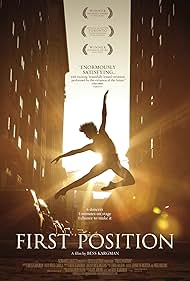
A documentary that follows six young dancers from around the world as they prepare for the Youth America Grand Prix, one of the most prestigious ballet competitions in the world.
Keep track of everything you watch; tell your friends.
If your account is linked with Facebook and you have turned on sharing, this will show up in your activity feed. If not, you can turn on sharing
here
.
While examining the influence of the fast food industry, Morgan Spurlock personally explores the consequences on his health of a diet of solely McDonald's food for one month.
HAPPY takes us on a journey from the swamps of Louisiana to the slums of Kolkata in search of what really makes people happy. Combining real life stories of people from around the world and... See full summary »
Director:
Roko Belic
Stars:
Anne Bechsgaard,
Gregory Berns,
Roy Blanchard
In 1994 Oregon became the first state to legalize physician-assisted suicide. At the time, only Belgium, Switzerland, and the Netherlands had legalized the practice. 'How to Die in Oregon' ... See full summary »
The story of how an eccentric French shop keeper and amateur film maker attempted to locate and befriend Banksy, only to have the artist turn the camera back on its owner. The film contains... See full summary »
The collar awarded to the winners of the Meilleur Ouvrier de France (Best Craftsman in France) is more than the ultimate recognition for every pastry chef - it is a dream and an obsession. ... See full summary »
Directors:
Chris Hegedus,
D.A. Pennebaker
Stars:
Jacquy Pfeiffer,
Sebastien Canonne,
Philippe Rigollot
First Position follows six talented young dancers (ages 9-19) from five continents as they prepare for a worldwide ballet competition that could transform their lives overnight. Written by
Production Team
If you are between the ages of 9 and 19, and you are a dedicated (and hugely talented) ballet dancer, then the Youth America Grand Prix is a dance competition you'll know all about. And dream about. It doesn't matter where you're from (some of the "stars" of this documentary come from Africa and Latin America): given colossal natural ability, extremely hard work and the right guidance, you, too, can try for the glittering prize. Bess Kargman's excellent film follows seven kids as they prepare for, and participate in, this intense contest.
What a joy to get to review something that isn't brain-dead! Ballet is very difficult to do, very beautiful to watch, and requires intelligence and artistic flair (rather like a good documentary, really), and Bess Kargman has made a ballet film which is not only picking up awards faster than Halle Berry gathers motoring citations, but "First Position" has achieved the nigh-impossible for a work of non-fiction, and is going on general theatrical release. It will hit the screens on Friday, May 4.
The premise is a simple and compelling one. Youngsters from all over the world strive to qualify for the Grand Prix finals, held in New York City. When the very best gather for the dance-off, the pressure is just about unbearable. Each contestant will have five minutes on stage. If you're sick, or overcome by nerves, or if you stumble during your routine too bad. All those years you worked for this, all those things you sacrificed in order to get here, are riding on the next three hundred seconds. Five thousand dancers enter each year, with this number being whittled down to a couple of hundred for the New York finals. From this small group, the winners will emerge. Kargman knows how to build suspense but the who-won-it is only one element in this excellent film. We get to see the physical pain these kids go through (check out the "foot-stretcher" used by little Aran, which looks like a medieval torture implement), we hear from their parents and dance teachers but, most of all, there is the beautiful ballet itself.
Like any documentary worth its salt, "First Position" asks as many questions as it answers. Thought-provoking contributions abound, like that from the teacher who states openly, "Kids who are pursuing ballet as a career give up their childhood." Can such a sacrifice be justified? Who gets to make the choice? Which is worse to push small children through the grueling practice schedules, or not to push them thereby passing up the chance for success? Is it fair to expose youngsters to the appalling pressure of the final round? This is a film which stays with the viewer long after the final credits have rolled.
One of the things you need to be good at, when you shoot a documentary, is judging what not to do or say. In this, Kargman has triumphed. She is never obtrusive, and she lets the images (and the kids) tell the story. Critic Dave Robson, reviewing the film for the Toronto International Film Festival (where, incidentally, it won considerable acclaim) puts it like this: "Though she casts a wide net, Kargman is careful to include only the most essential commentary. She frequently complements her cast's words with beautiful shots of dancing and juxtaposes them with more candid and vulnerable moments. It is perhaps trite to say that a film about an aesthetic discipline looks beautiful, but "First Position" does. It certainly helps that dancers are well lit, but more to the point, Kargman keeps her cinematography simple. To be too clever would distract from the dancing." In case anyone reading this is under the misapprehension that it's just a bunch of well-heeled preppy youngsters indulging in a glorified hobby, it is worth mentioning Michaela Deprince. This young finalist hails from Sierra Leone, where she witnessed her parents getting murdered. "It's a miracle I'm even here," she says and she bears the scars to prove it. Indeed, overall, this is a singularly resilient bunch of kids. After all they have been through, it is surprising not to mention heart-warming to see how balanced, articulate and likable they all are. Take, for example, the tiny 12-year-old Miko Fogarty, who frequently has to field comments from others, to the effect that she has missed out on her childhood. She doesn't happen to agree.
This is Bess Kargman's breakthrough movie, and much credit she deserves. She directed the project and also took a major hand in the editing. Her director of photography, Nick Higgins, has done a lot of documentary work in his career but surely nothing as visually captivating as this.
By the way, for those of you who, like me, have a penchant for movie titles which contain more than one level of meaning, "First Position" refers of course to winning the Grand Prix, and therefore being guaranteed a prestigious professional contract but it is also a ballet term, denoting the preliminary posture standing with heels together, toes splayed outwards. The things you learn on IMDb, huh?
22 of 24 people found this review helpful.
Was this review helpful to you?
If you are between the ages of 9 and 19, and you are a dedicated (and hugely talented) ballet dancer, then the Youth America Grand Prix is a dance competition you'll know all about. And dream about. It doesn't matter where you're from (some of the "stars" of this documentary come from Africa and Latin America): given colossal natural ability, extremely hard work and the right guidance, you, too, can try for the glittering prize. Bess Kargman's excellent film follows seven kids as they prepare for, and participate in, this intense contest.
What a joy to get to review something that isn't brain-dead! Ballet is very difficult to do, very beautiful to watch, and requires intelligence and artistic flair (rather like a good documentary, really), and Bess Kargman has made a ballet film which is not only picking up awards faster than Halle Berry gathers motoring citations, but "First Position" has achieved the nigh-impossible for a work of non-fiction, and is going on general theatrical release. It will hit the screens on Friday, May 4.
The premise is a simple and compelling one. Youngsters from all over the world strive to qualify for the Grand Prix finals, held in New York City. When the very best gather for the dance-off, the pressure is just about unbearable. Each contestant will have five minutes on stage. If you're sick, or overcome by nerves, or if you stumble during your routine too bad. All those years you worked for this, all those things you sacrificed in order to get here, are riding on the next three hundred seconds. Five thousand dancers enter each year, with this number being whittled down to a couple of hundred for the New York finals. From this small group, the winners will emerge. Kargman knows how to build suspense but the who-won-it is only one element in this excellent film. We get to see the physical pain these kids go through (check out the "foot-stretcher" used by little Aran, which looks like a medieval torture implement), we hear from their parents and dance teachers but, most of all, there is the beautiful ballet itself.
Like any documentary worth its salt, "First Position" asks as many questions as it answers. Thought-provoking contributions abound, like that from the teacher who states openly, "Kids who are pursuing ballet as a career give up their childhood." Can such a sacrifice be justified? Who gets to make the choice? Which is worse to push small children through the grueling practice schedules, or not to push them thereby passing up the chance for success? Is it fair to expose youngsters to the appalling pressure of the final round? This is a film which stays with the viewer long after the final credits have rolled.
One of the things you need to be good at, when you shoot a documentary, is judging what not to do or say. In this, Kargman has triumphed. She is never obtrusive, and she lets the images (and the kids) tell the story. Critic Dave Robson, reviewing the film for the Toronto International Film Festival (where, incidentally, it won considerable acclaim) puts it like this: "Though she casts a wide net, Kargman is careful to include only the most essential commentary. She frequently complements her cast's words with beautiful shots of dancing and juxtaposes them with more candid and vulnerable moments. It is perhaps trite to say that a film about an aesthetic discipline looks beautiful, but "First Position" does. It certainly helps that dancers are well lit, but more to the point, Kargman keeps her cinematography simple. To be too clever would distract from the dancing." In case anyone reading this is under the misapprehension that it's just a bunch of well-heeled preppy youngsters indulging in a glorified hobby, it is worth mentioning Michaela Deprince. This young finalist hails from Sierra Leone, where she witnessed her parents getting murdered. "It's a miracle I'm even here," she says and she bears the scars to prove it. Indeed, overall, this is a singularly resilient bunch of kids. After all they have been through, it is surprising not to mention heart-warming to see how balanced, articulate and likable they all are. Take, for example, the tiny 12-year-old Miko Fogarty, who frequently has to field comments from others, to the effect that she has missed out on her childhood. She doesn't happen to agree.
This is Bess Kargman's breakthrough movie, and much credit she deserves. She directed the project and also took a major hand in the editing. Her director of photography, Nick Higgins, has done a lot of documentary work in his career but surely nothing as visually captivating as this.
By the way, for those of you who, like me, have a penchant for movie titles which contain more than one level of meaning, "First Position" refers of course to winning the Grand Prix, and therefore being guaranteed a prestigious professional contract but it is also a ballet term, denoting the preliminary posture standing with heels together, toes splayed outwards. The things you learn on IMDb, huh?